The Unspoken Limits: How Much Cannabis Can You *Really* Consume Before Hitting a Wall?
Discover the science behind cannabis consumption limits. Explore theoretical lethal doses, the plateau effect, and the risks of excessive daily use, including 'greening out' and CHS.
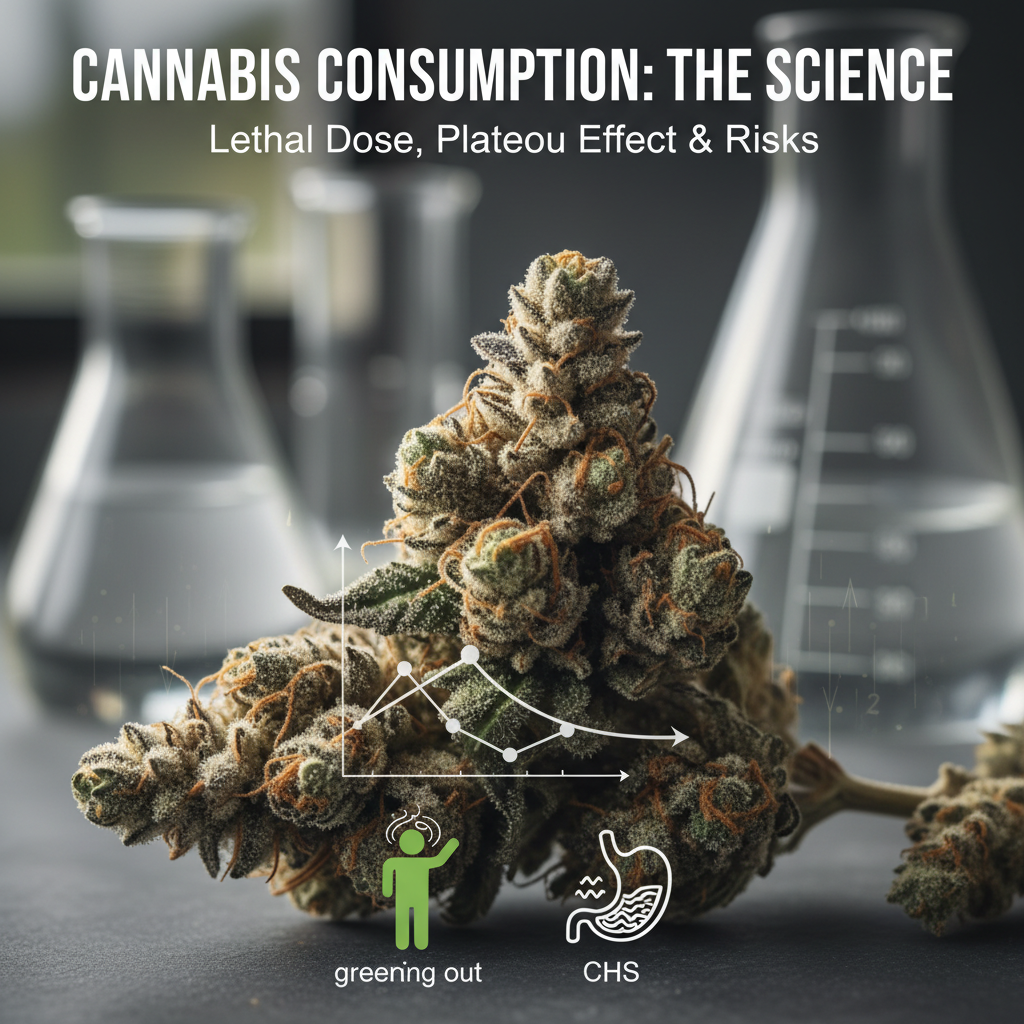
<h1>Unveiling the Caps: Understanding Your Limits with Cannabis Consumption</h1> <p>While the notion of a fatal overdose from cannabis alone remains virtually impossible, the human body has definitive biological, psychological, and physiological boundaries for how much tetrahydrocannabinol (THC) can be processed in a single day. These limits are dictated by the body's metabolic pathways for THC and the saturation point of cannabinoid receptors in the brain.</p> <h2>The Theoretical vs. Practical Lethal Dose</h2> <p>Scientifically, the estimated lethal dose (LD50) of THC for humans is remarkably high, around 30 mg/kg. For an average 150-pound (68 kg) individual, this translates to a staggering requirement of approximately 2 grams of pure THC consumed rapidly. To reach this through smoking high-grade flower (20% THC), one would need to inhale about 10 grams of pure flower almost simultaneously. However, the sheer physical act of smoking such a large quantity in a short period is practically unfeasible for most, as the body's natural defenses, such as intense lethargy or 'greening out,' typically intervene long before this theoretical threshold is reached.</p> <h2>The Plateau Effect: Diminishing Returns on Intoxication</h2> <p>Research, including studies from the University of Colorado, highlights a distinct 'plateau' in intoxication levels. Studies comparing cannabis flower to high-potency concentrates revealed that despite significantly higher blood THC levels in concentrate users, their subjective experience of intoxication was remarkably similar. This phenomenon is attributed to the saturation of cannabinoid receptors (CB1) in the brain. Once these receptors are fully occupied by THC, consuming additional cannabis may increase THC levels in the bloodstream and fat tissues but does not necessarily lead to a more profound psychoactive effect.</p> <h2>Defining 'Too Much': Typical vs. Heavy Daily Use</h2> <p>What constitutes excessive consumption is highly individual, depending on tolerance and usage patterns:</p> <ul><li><strong>Moderate/Regular Users:</strong> Typically consume between 0.7 and 1.35 grams of flower daily.</li><li><strong>Heavy/Chronic Users:</strong> Generally consume 1 to 3 grams of flower per day.</li><li><strong>High-Frequency Patterns:</strong> In studies focusing on individuals with cannabis-related health issues, over 40% reported using marijuana more than five times a day.</li></ul> <h2>Risks Associated with Excessive Daily Consumption</h2> <p>While a fatal overdose is not a direct concern, consuming excessive amounts of cannabis within a 24-hour period can trigger several acute and long-term health issues:</p> <ul><li><strong>Greening Out:</strong> This temporary state, often described as a 'cannabis overdose,' is characterized by severe nausea, vomiting, dizziness, and intense anxiety or paranoia. Symptoms usually subside within an hour but can persist for up to 24 hours.</li><li><strong>Cannabinoid Hyperemesis Syndrome (CHS):</strong> Primarily affecting long-term, daily users, CHS causes cyclical episodes of severe, uncontrollable vomiting and abdominal pain. While hot showers may offer temporary relief, the only permanent solution is ceasing cannabis use.</li><li><strong>Respiratory and Cardiovascular Strain:</strong> Smoking any substance irritates the lungs, potentially leading to acute bronchitis. THC also causes a rapid increase in heart rate and can lead to fluctuating blood pressure, posing risks for individuals with pre-existing cardiovascular conditions.</li></ul> <h2>Summary of Cannabis Consumption Limits</h2> <p>Factor</p><p>Limit / Finding</p><p>Lethal Dose (LD50)</p><p>~30 mg/kg (Theoretically ~2g of pure THC for an average adult)</p><p>Average Daily Use</p><p>1.35 grams of flower</p><p>Heavy Daily Use</p><p>1–3 grams of flower or 5+ sessions per day</p><p>Bioavailability (Inhalation)</p><p>10%–35% of available THC to the blood</p><p>Duration of High</p><p>1–3 hours for smoking; up to 8 hours for lingering effects</p> <h2>Conclusion: Functionality Over Fatalities</h2> <p>While one cannot "smoke themselves to death" in the conventional sense, the body operates within functional limits. Once the brain's cannabinoid receptors reach saturation, further consumption primarily increases the likelihood of adverse effects like 'greening out' or potential long-term respiratory issues, without enhancing the desired psychoactive experience.</p>
Cannabis Overload: How Much Weed is TOO Much? The Unseen Limits Revealed
Ever wondered about the real limits of cannabis consumption? Discover the science behind THC saturation, the 'greening out' phenomenon, and conditions like CHS. What happens when your brain says 'enough'?
HealthChronic Pain, Anxiety, and Depression Vanish? Groundbreaking Study Reveals Medical Cannabis' Long-Term Secret
Discover how medical cannabis is offering sustained relief for patients battling chronic pain, anxiety, and depression. This study reveals surprising long-term benefits and minimal side effects.
HealthTrump's Bold Mandate Unlocks Cannabis Secrets: Is MMJ International Holdings the Key to FDA-Approved Medicine?
A surprise executive order reshapes the cannabis landscape, pushing it towards pharmaceutical rigor. Discover how MMJ International Holdings is uniquely positioned to lead this federal alignment.
Health