He Trained to Be a Catholic Priest for 6 Years. Here's What It Was Actually Like.
A former seminarian called into The Gobcast to describe six years of priest training outside New York City: 5 a.m. prayers, a $10,000-a-year stipend, sneaking beer through windows — and the incident that got him kicked out.
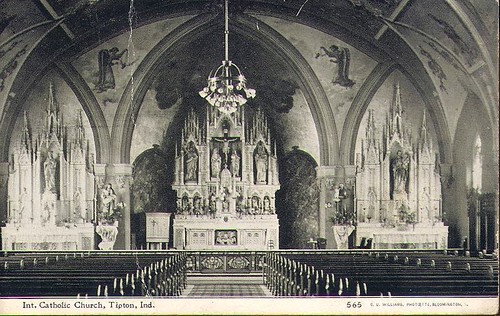
Every religion has a version of this: the young person who enters training for the clergy, only to discover the reality is nothing like the calling they imagined. On a recent episode of The Gobcast, a caller who spent years in Catholic priest training outside New York City told the story of what that life was actually like — and how it ended.
The road in: an 18-year-old straight out of high school
The caller started his training at 18, going straight from high school into the seminary. By his own account, the decision came during a religious phase around COVID — one that didn't survive contact with the day-to-day reality of the program.
"It was hell in there," he said. "It was terrible."
The training took years and demanded a level of structure most people never experience. His description of a typical day: wake up around 5 a.m., spend about four hours in a dark room required to pray, attend classes, and pray again throughout the day. Fall asleep during the prayer sessions, he said, and you'd get hit.
Outside of prayer, the dress code was strict — a suit or a collar at all times — and personal time was monitored closely. Students met with a supervisor weekly and had to write a three-page paper on how their week went, including a review of their phone screen time.
The economics of priesthood
One part of the story that got the host's attention was the pay. Priests in training get a place to live and roughly $10,000 a year, which is expected to cover a car, insurance, food, and anything else that comes up.
"No wonder they swing around that donation bowl," the host said. The caller, who had already soured on the whole experience, was blunt about the tradeoffs: no money, and no chance of marriage.
"Priests can't get married, they can't do anything like that," he said. "So, that's not for me."
Sneaking beer into the seminary
Like any group of young people stuck in a rigid environment, some students found ways to bend the rules. The caller said he and a couple of other guys would sneak cases of beer into the building — Miller Genuine Draft, specifically, because the bottles were thin enough to hide in a jacket pocket. Hard liquor went into water bottles: "pour a bottle of Jack Daniel's, put it into a water bottle, and bring that in. No one would even notice."
They'd go to prayers high because, as he put it, "what else can I do?" Of the roughly 30 students in the program, only the caller and two others broke the rules — which meant they had to be careful, because the students who followed them would snitch if they got caught.
The escape route, when they wanted out: his second-floor window, across the roof, down a ladder, and onto a train heading into New York City.
How it ended: the incident, the kick-out, and the restraining order
The drinking eventually got found out. But that wasn't what led to the restraining orders. The caller says one of the priests in the program used to hit him — "pretty in line with it," as he dryly noted. When he reported it to another priest, he says he was told he wasn't believed, even though he pointed to five witnesses.
"I said, 'There was five people around. Go ask all of them.' They all backed me up," he said. "They said, 'We don't believe you.'"
When he left in May 2025, he called the local police department and requested a restraining order, explaining he still attended the same university. He also pressed charges. Months later, he said, he was still getting calls from the prosecutor's office about the case.
Life after the seminary
The caller is now a bartender — he took the call from behind the bar — and is back in school for nursing. He described the day he left as feeling like getting out of prison, and his first real conversation with a woman afterward as "my first meal."
Asked whether he still has anything to do with the church, he said no.
"I don't [mess] with it anymore," he said. "They did all those bad things. I was like, 'I don't want to be part of that.'"
What this story has to do with cannabis
It's a small but recurring pattern: the people who grew up in the strictest, most restrictive environments are often the ones most curious about substances later on. The host made the same observation in this episode, noting that a lot of the drug users he's known came out of religious or tightly controlled households — the people who "really want to adventure and branch out the most."
If you grew up in a restrictive environment and are just now exploring cannabis for the first time, it's worth going slow. Start with a low-THC product, pick a comfortable setting, and remember that dispensaries exist to answer questions, not judge them. Our strain database and dispensary directory are built for exactly that — researching before you buy.
The full conversation, including the caller's complete story and the host's reaction, is in episode 91 of The Gobcast.
Opening a business in New York?
License applications, compliance, and rules change constantly. Share what you need and we'll connect you with an attorney who handles it.
Six Years on Dialysis, Then a Transplant: B Eazy on the Health Scare Behind His Cannabis Career
Before the cannabis success, B Eazy's kidneys failed — six years of dialysis, a transplant, and a donor whose story he didn't know for a year. He told The Gobcast what the recovery was like.
interviews"I Was Doing 10 Oxycontins a Day": B Eazy's Six-Year Opiate Addiction and How He Got Clean
On The Gobcast, Boston cannabis figure B Eazy opened up about the addiction behind his success: Percocet to Vicodin to Oxycontin, the 'get off Oxies by doing Coke' trap, six years in the cycle, and being clean since August 2007.
interviewsFrom $1 Weed Kits to a $10 Million Exit: The Daily High Club Story
He shipped $1 smoking kits in flat paper envelopes, charged $2 for shipping, and made his margin on the difference. Six years and a million bongs later, Daily High Club sold for $10 million. Founder Harrison Bomb tells the whole arc — the hack, the grind, the exit, and the one thing he'd do differently.
interviews